
The Data Center Dilemma: Rural Alabama Communities Fight Back Against Secretive Tech Expansion
Rural residents near Demopolis are pushing for historic zoning changes to protect their land from a wave of mysterious and secretive data center developments.
 Ethan Walker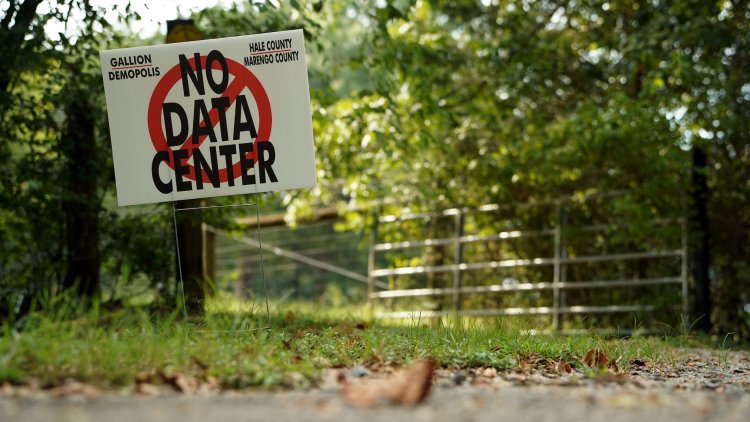
In the rolling cattle pastures of rural Alabama, a new kind of industrial frontier is emerging, leaving local residents like Wilson Hamrick to question the future of their communities. As data center companies increasingly set their sights on the vast, open spaces of the Deep South, a wave of mysterious representatives and secretive developers has arrived, often operating under the radar of public scrutiny. The lack of transparency has sparked a grassroots movement among neighbors who feel caught in the crosshairs of a silent land rush, where even elected officials claim to be kept in the dark about the true scope of these projects.
The tension is particularly visible near Demopolis, where residents like Katherine Eddins have taken the drastic step of posting "NO DATA CENTER" signs outside their homes. This conflict is pushing some of the state's most rural populations to rethink long-held core beliefs about property rights and government oversight. For the first time in 125 years, many are calling on the state to rewrite its traditional business-as-usual approach and allow for local zoning laws—a measure long resisted in rural Alabama—to provide a necessary buffer against the rapid expansion of tech infrastructure.
While developers remain tight-lipped, the situation signifies a major shift for Alabama’s rural identity, as the demand for high-speed digital infrastructure clashes with the traditional agricultural way of life. The push for zoning represents a significant cultural pivot, highlighting a growing fear that rural communities are being viewed as easy targets for large-scale industrialization. As the state balances the lure of economic investment with the need for community preservation, the outcome of this battle could redefine how Alabama manages its land and protects its citizens for the next century.